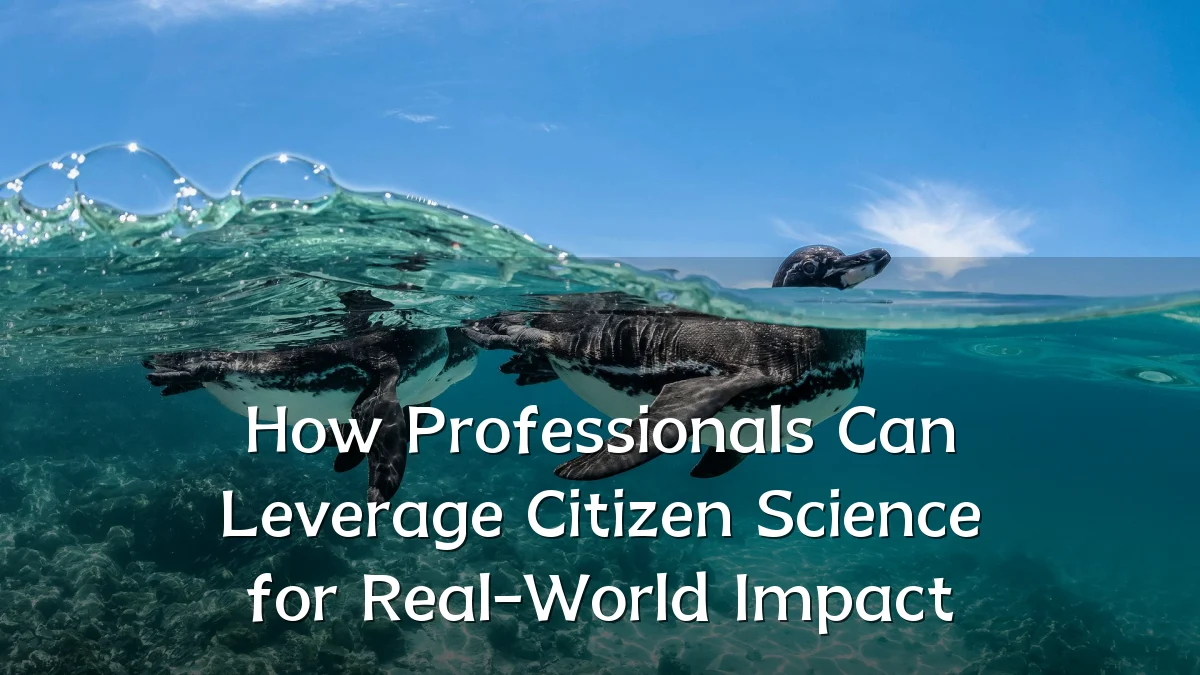
How Professionals Can Leverage Citizen Science for Real-World Impact
In recent years, the line between professional research and public participation has blurred. Professionals across environmental science, urban planning, public health, and data analytics are increasingly tapping into citizen science initiatives—not as a novelty, but as a structured method to expand data collection, improve community engagement, and validate findings at scale. This shift reflects a growing recognition that well-designed citizen science can produce outputs rigorous enough for peer-reviewed work while also delivering tangible benefits to the communities involved.
Recent Trends in Professional Adoption
Several developments over the past few years have accelerated professional interest in citizen science. Funding bodies now commonly require a public engagement component in large grants, and professional societies have begun publishing formal guidelines for data quality and volunteer training. Major platforms such as Zooniverse, iNaturalist, and eBird have matured, offering API access and standardized metadata that integrate with professional databases.

- Platform maturation: Infrastructure now supports automated validation, geotagging, and expert review of submitted observations, reducing the manual oversight burden on professionals.
- Standardized protocols: Many programs now use pre-validated sampling methods that produce datasets comparable across regions and years.
- Hybrid roles: Institutions increasingly employ “citizen science coordinators” who bridge volunteer management and research design, allowing subject-matter experts to focus on analysis.
Background: From Amateur Hobby to Structured Methodology
Citizen science is not new—amateur naturalists have contributed to ornithology and astronomy for centuries. What has changed is the explicit integration of non-specialist contributions into formal research workflows. Professionals once treated such data as supplementary or anecdotal; now, with smartphone sensors, GPS accuracy, and cloud-based consensus algorithms, trained volunteers often collect data of comparable quality to field technicians. The shift has been particularly visible in ecology, where species distribution models now routinely incorporate citizen-reported sightings alongside professional surveys.

“The key advance is not that volunteers collect data, but that professionals design systems where uncertainty is measured and accounted for. A well-structured citizen science project can achieve inter-rater reliability scores above 0.85 on classification tasks.” — paraphrased from multiple methodology reviews
Common Concerns Among Professionals
Despite growing acceptance, many professionals remain cautious. Chief among their reservations are data quality, volunteer retention, and the time investment required to manage a distributed workforce. These concerns are legitimate but not insurmountable when approached with clear design principles.
- Data quality: Errors are manageable through training modules, automated flagging of outliers, and expert verification of a stratified sample (typically 5–15% of submissions).
- Volunteer bias: Participants tend to be clustered in accessible areas. Professionals counteract this with targeted recruitment and by weighting spatial coverage in statistical models.
- Time overhead: Setting up a project typically requires 20–40 hours of upfront design, but once protocols are stable, ongoing management can be as low as two to four hours per week for a medium-sized project.
- Credibility: Journals and review panels now generally accept citizen-generated data when accompanied by documented protocols and validation metrics.
Likely Impact on Professional Practice
If current trends continue, citizen science will move from a peripheral activity to a core tool in several professional domains. The most immediate impact will be on projects that require broad geographic coverage or repeated sampling over long time periods—tasks that are expensive or logistically impossible for small professional teams. Over the next three to five years, professionals can expect to see:
- Expanded monitoring networks: Air quality, water testing, and invasive species tracking will be covered at resolutions that were previously cost-prohibitive.
- Faster model validation: Machine learning classifiers for ecological or urban data can be trained and validated using large, diverse citizen-collected datasets.
- Policy influence: Local governments and regulatory agencies increasingly consider citizen-collected data in environmental assessments and land-use decisions, provided the collection followed established protocols.
What to Watch Next
Several developments in the near future will determine how widely professionals adopt citizen science as a standard practice.
- Certification frameworks: Professional bodies in ecology, public health, and geography are developing tiered certifications for practitioners who design and manage citizen science projects.
- Data interoperability: Watch for progress on common metadata standards that allow citizen-generated data to flow directly into government and institutional databases without manual reformatting.
- Equity and access: Efforts to recruit and retain participants from underrepresented communities—both rural and urban—will be critical to reducing spatial and demographic bias in collected data.
- AI-assisted quality control: Real-time feedback to volunteers (e.g., “Your photo is too blurry—please retake”) will reduce the post-hoc cleanup burden on professionals.
For professionals considering their first citizen science project, the most pragmatic approach is to start small: define a narrow question, use an existing platform with built-in validation, and budget time for a pilot phase. The evidence suggests that when designed with rigor, citizen science does not dilute professional standards—it can amplify them.